A UK or US buyer looking at the Montenegrin coast usually meets three different products under one label: a finished new apartment, an off-plan unit still under construction, and a resale home with a history. They differ in tax route, in what you can inspect before paying, and in what can go wrong between reservation and registration. This guide compares them point by point, with figures dated as of November 2026.
New-build property in Montenegro generally offers modern finishes and lower initial maintenance, while resale homes offer established locations and a property you can inspect before buying. The better choice depends on total costs, legal status and intended use. UK and US buyers should compare VAT or transfer-tax treatment, cadastral records, building permits and renovation or completion risks before committing.

New Build vs Resale in Montenegro: The Essential Differences
The three property types differ less by the age of the walls than by the legal and practical position of the buyer. The table below sets the framework used for the rest of this guide, with all statements as of November 2026 and subject to the facts of each transaction.
| Factor | Completed new build | Off-plan purchase | Resale home |
|---|---|---|---|
| Inspection | Full physical inspection possible | Only plans, a show flat or progress photographs | Full inspection, including services and neighbours |
| Payment timing | Usually lump sum or short schedule | Staged payments linked to construction milestones | Deposit, then balance at the notary |
| Tax route | Often VAT (PDV) on a qualifying developer sale | Same question: VAT on the supply, confirmed in writing | Progressive property transfer tax, paid by the buyer |
| Registration | Check that the unit is separately registered | Unit may not yet exist as a registered unit | Existing entry in the cadastre |
| Condition | New finishes; snagging likely | Unknown until handover | Varies from refurbished to dated |
| Maintenance | Lower early repairs; service charges possible | As new build, after delivery | Repair needs depend on age and past upkeep |
| Delivery | Immediate or near-immediate | Months or years, with delay exposure | Immediate after registration |
| Neighbourhood knowledge | Limited: community not yet settled | Weakest: surroundings may still be a building site | Strongest: you can visit in winter and ask neighbours |
| Main risk | Registration gaps, hidden defects | Delay, insolvency, changes to specification | Undocumented alterations, structural and damp problems |
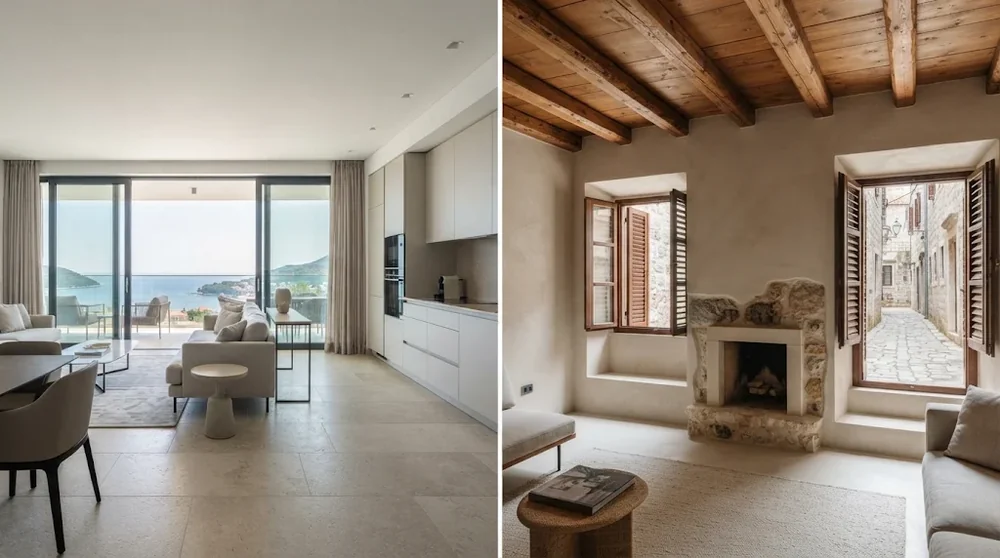
What counts as a new build, an off-plan property or a resale?
A completed new build is a finished apartment or house in a completed building, normally offered for the first time by the developer. A finished flat is not automatically a separately registered one, so registration must still be checked.
An off-plan purchase is a contract signed before the unit is finished. You are buying a contractual claim on a future apartment, usually with staged payments tied to construction.
A resale is a property already owned by a previous buyer or private owner, even if it is only two years old. Competitors often merge completed and uncompleted units under one “new build” heading; I keep them apart because the payment and delivery risks are not alike.
This is where most first-time buyers slip up: they compare a finished flat they can touch with a drawing that carries a lower price, and treat the gap as a saving. It is a different product with a different risk.
Can UK and US Buyers Purchase Either Property Type?
British and American citizens can generally buy residential apartments and houses in Montenegro, as far as I understand the position as of November 2026. The exact route depends on the asset, its land category and the checks that apply to it, so a lawyer should confirm eligibility for the specific property before any payment.
Does nationality change the buying process?
For an ordinary apartment, the process is broadly the same for UK, US and local buyers: reservation, due diligence, a notarial property purchase agreement, tax payment and registration at the Montenegro Real Estate Administration (Uprava za nekretnine). Restrictions tend to attach to the land, for example agricultural land or particular protected or border zones, rather than to a passport. Never assume a house with a garden is unrestricted because the apartment next door was straightforward.
Ownership and residence are separate matters. Owning a property does not automatically give a right to live in Montenegro, and any residence application based on ownership has its own conditions that change over time. Take immigration advice separately from the conveyancing.
Use an independent Montenegrin lawyer who acts only for you, not the seller’s or developer’s lawyer. If the contract is in Montenegrin, you will need a qualified interpreter, and any document you sign should be understood in full before signing.
Can you buy without travelling to Montenegro?
Remote purchase is possible, usually through a power of attorney. A power of attorney signed abroad normally needs notarisation, an apostille or equivalent legalisation, and a certified translation, but the notary handling the sale should confirm what is accepted. Keep its scope narrow: name the property, the maximum price and the specific acts allowed.
Currency is a real cost. Transactions are in euros, so a buyer holding sterling or dollars carries exchange-rate risk between reservation and the final payment, plus bank transfer fees. Foreign banks may also ask for evidence of source of funds, so start that paperwork early.
Are New Builds More Expensive Than Resale Homes?
Asking prices for new builds are usually higher than for resale flats, but no official dataset measures the exact gap. The three sources below measure different things and should not be combined.
| Measure | Source and date | Figure (€/m²) | What it covers |
|---|---|---|---|
| Montenegro, new dwellings | MONSTAT, Q2 2026 (release dated 20 August 2026) | 2,557 | Average price of dwellings sold for the first time in new residential buildings |
| Podgorica, new dwellings | MONSTAT, Q2 2026 | 2,510 | Same definition, capital only |
| Coastal region, new dwellings | MONSTAT, Q2 2026 | 2,838 | Same definition, coastal municipalities |
| New-build listings | Fijaka, 9 November 2026 | 3,180 (median) | Asking prices, 982 classified listings |
| Resale listings | Fijaka, 9 November 2026 | 2,500 (median) | Asking prices, 81 classified listings |
What does official price data actually measure?
MONSTAT, the national statistical office, publishes quarterly statistics on prices of dwellings in new residential buildings. As I read its methodology, it counts only dwellings sold for the first time, and it has no resale series. The national average can move with the share of lower-priced solidarity housing or with the mix of projects sold in a quarter, so a quarterly rise does not mean every building became dearer. MONSTAT’s coastal region covers Bar, Budva, Herceg Novi, Kotor, Tivat and Ulcinj. I have used Q2 2026 as the latest release I could confirm as of 13 November 2026; check for a newer one.
The Fijaka comparison is a different animal. The platform’s median asking price for new builds was €680/m² higher than for resale flats, about 27% (€680 divided by €2,500). But the samples are very unequal (982 against 81), include only listings the platform could classify, and capture asking prices, not completed sales. Location and condition also confound it: new builds cluster in newer districts, while resale stock is spread across older streets. It is not a nationally representative premium.
Why can a cheaper resale become more expensive?
A lower sticker price can be overtaken by tax and works. The following is a hypothetical illustration, not a valuation: two 70 m² apartments, with assumed prices of €3,000/m² for the new build (VAT-inclusive) and €2,800/m² for the resale, and an assumed €25,000 renovation allowance.
| Item | New build | Resale |
|---|---|---|
| Price (70 m² × assumed €/m²) | €210,000 | €196,000 |
| Transfer tax (assuming €196,000 taxable value) | €0 (VAT already in price) | €6,800 |
| Assumed renovation allowance | €0 | €25,000 |
| Subtotal of quantified items | €210,000 | €227,800 |
The resale tax is €4,500 plus 5% of €46,000 (€2,300), which equals €6,800. Without any renovation, the resale subtotal is €202,800, still €7,200 below the new build. So in this example the resale becomes more expensive only if works exceed €7,200. Notary, registration, legal and other costs are excluded from both columns.
What Taxes and Buying Costs Apply?
The tax route depends on the seller and the transaction, not on how new the apartment looks. A qualifying first sale by a developer is generally taxed through Montenegro VAT (PDV), whose standard rate is 21%. A resale is generally taxed through property transfer tax under the Law on Property Transfer Tax (Zakon o porezu na promet nepokretnosti). I have checked this against professional tax publications and the Government’s announcements as of November 2026, but you should confirm the current legal text in the official Government and Tax Administration publications and with a tax adviser.
Do you pay transfer tax on a new build?
On a qualifying first sale by a VAT-registered developer, you generally pay VAT, normally included in the advertised price, and an additional transfer tax is not automatically added on top. Never assume this from the brochure: ask for the contract, the invoice and written confirmation of the seller’s VAT status. A developer who sells a unit it never previously supplied through the VAT system, or a unit resold by an investor, may fall on the other side of the line. I would also never say every new apartment gets identical treatment.
The progressive transfer-tax schedule, in application from 1 January 2024, works as follows, with the buyer usually liable and the taxable base normally being the market value assessed by the Tax Administration, which may differ from the contract price.
| Taxable value | Tax |
|---|---|
| Up to €150,000 | 3% of the value |
| €150,000 to €500,000 | €4,500 plus 5% of the amount above €150,000 |
| Above €500,000 | €22,000 plus 6% of the amount above €500,000 |
Illustrative example, assuming the schedule is unchanged and a €250,000 taxable value for a resale: €4,500 + 5% × €100,000 (€5,000) = €9,500, an effective rate of 3.8%.
On paper this looks fine, but in reality the contract price and the taxable value are two different numbers. Ask your adviser which one the Tax Administration is likely to use before you calculate your budget.
What is the true all-in purchase price?
The advertised price is only the starting point. Apply the same list to every property you compare and fill in real quotations rather than my guesses; I have deliberately not invented fixed fees.
| Cost item | New build | Resale | Comment |
|---|---|---|---|
| Purchase price | VAT normally included | Net of buyer’s tax | Confirm what the price includes |
| Transfer tax | Generally not additional if VAT applies | Progressive, see brackets | Depends on seller and supply |
| Notary | Applies | Applies | Tariff-based; ask the notary |
| Cadastral registration | Applies | Applies | Administrative fees |
| Independent lawyer | Applies | Applies | Agree scope and fee in writing |
| Translation and interpreter | Likely | Likely | Needed for contracts and powers of attorney |
| Technical survey | Snagging inspection | Full building survey | Quotes vary by scope |
| Furnishing | Often unfurnished | Sometimes included | Check inventory |
| Repairs or works | Defect rectification | Possible refurbishment | Define scope before pricing |
| Utilities and management | Set-up and deposits | Transfer of accounts | Check arrears before completion |
Annual property taxation is levied locally on owners, and rates and treatment vary by municipality, so I would confirm the figure for a specific property with the local tax office rather than quote a national percentage.
Is a New-Build or Off-Plan Apartment Safer?
A completed, separately registered apartment is generally safer than an off-plan contract because you can inspect the finished unit and check its registration. Off-plan protection depends entirely on the contract and the developer. Escrow accounts, bank guarantees and refund rights are not universal assumptions: they exist only if the contract and the surrounding documents provide them.
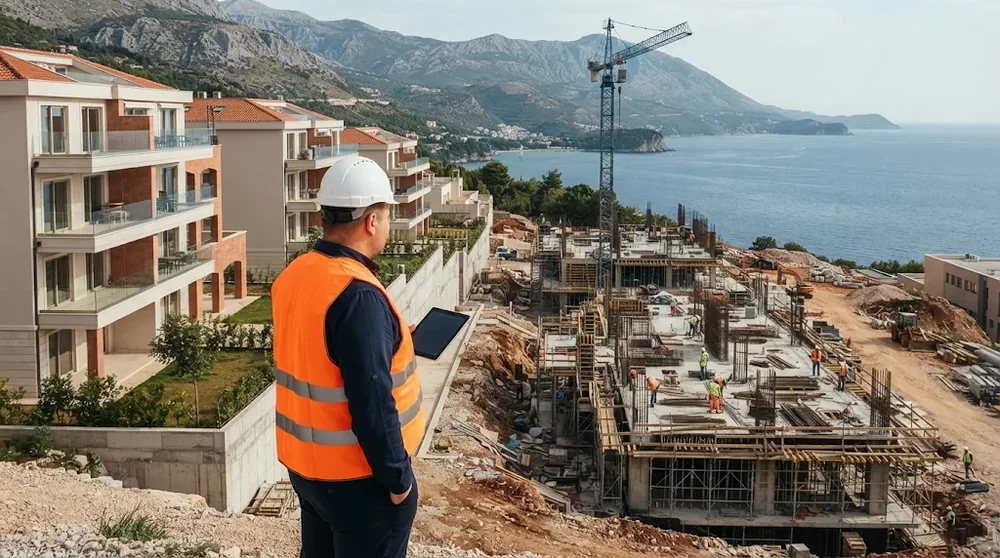
What should you check before reserving off-plan?
Before you pay a reservation fee, make sure the answers to the following are in your hands, in writing, reviewed by your own lawyer.
- Developer identity and authority: legal entity, VAT status, and authority to sell this specific unit.
- Land title: a current list nepokretnosti showing who owns the plot and whether the developer holds the right to build.
- Mortgages and encumbrances: any bank charge over the plot, and how the developer will discharge it on your unit.
- Building permit (građevinska dozvola): valid, matching the project and the number of units being sold.
- Approved plans and unit area: contractual area measured the same way as the permit, with balconies and terraces identified separately.
- Specification schedule: finishes, appliances and the right to approve substitutions.
- Payment schedule: each instalment linked to an objectively verifiable construction milestone.
- Completion and handover: date, snagging procedure, technical acceptance and the use permit (upotrebna dozvola).
- Individual registration: who applies for registration of your unit, when, and at whose cost.
- Safeguards: any escrow, guarantee or termination right, and what actually happens to money already paid.
What happens if the developer delays completion?
The consequence is whatever the contract says. A well-drafted agreement sets a long-stop date, daily or monthly compensation, and a right to terminate with refund. A weak one offers none, leaving you with a general claim in court. Montenegrin law on obligations provides general remedies for breach, but I would not rely on them as a substitute for contractual protection, and a legal opinion on enforcement against that particular developer is worth paying for. Do not assume a guaranteed completion date or refund.
What Are the Hidden Risks of Resale Property?
The main risks of a resale home are hidden physical defects and undocumented changes, not age as such. This house has a story, and so does its paperwork: a stone house in the Bay of Kotor may have been extended three times by three generations, and only some of it may be on the plans. Restoring my own stone house taught me general lessons, not case studies: always define the scope of works before comparing quotes, expect moisture to be the first surprise, and never accept a verbal assurance about permits.
- Structure: cracks, bulging walls, sagging floors, and any removal of load-bearing walls during past refurbishments.
- Seismic resilience: Montenegro is seismically active, and the construction year alone does not make a building safe or unsafe; ask a structural engineer.
- Roof: timber condition, tiles, flashings and gutters, and any leaks stained into upper ceilings.
- Damp and salt: rising damp, condensation, and salt efflorescence on coastal masonry, especially at ground level and behind furniture.
- Façade and waterproofing: render condition, balcony slabs, basement and terrace membranes.
- Drainage and plumbing: septic or sewer connection, pipe material, water pressure and storage tanks.
- Electrics: age of wiring, consumer unit, earthing and available connection capacity for air conditioning.
- Heating, cooling and insulation: heat pumps or split units, window quality and winter comfort, since many coastal homes are designed for summer.
- Common parts: lifts, roofs, stairwells, and any planned or unpaid building repairs shared with other owners.
- Extensions and conversions: enclosed terraces, added floors or annexes that exceed the registered area or the permit.
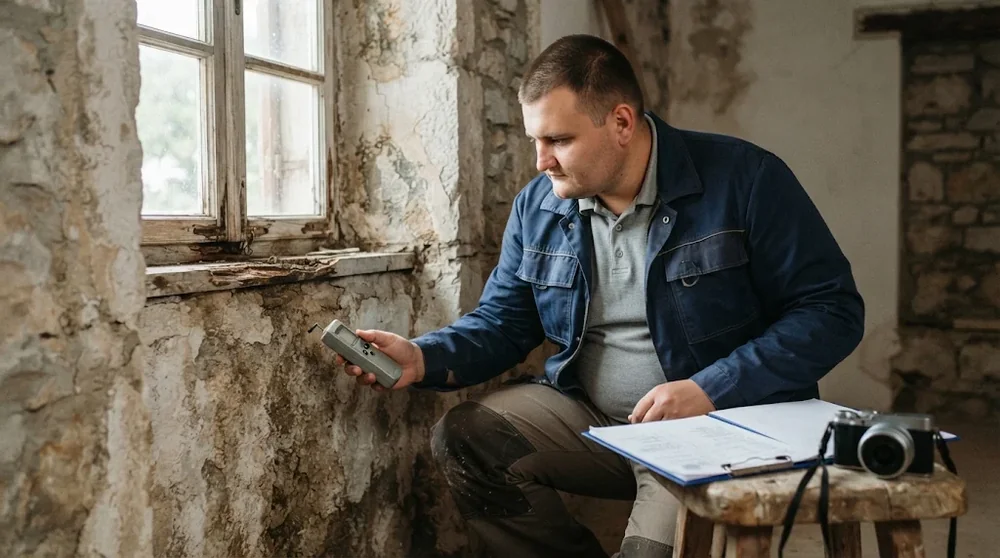
What should a building survey cover?
A building survey should cover the structure, roof, damp, services, extensions and a costed list of repairs. It should be commissioned by you from an independent engineer or surveyor, not recommended by the seller. Ask for a written scope and a priced schedule; quotes from contractors are comparable only if they price the same defined work.
Which Documents Prove the Property Is Legal?
No single document proves that a property is legal. A current list nepokretnosti (the cadastral property extract issued by the Real Estate Administration) shows registered ownership and burdens, but it is a starting point. It does not on its own prove that every alteration is permitted or that the sale is free of restrictions. The first document I ask for is this extract, issued no more than a few days before any decision.
| Document or check | Completed new build | Off-plan | Resale home |
|---|---|---|---|
| List nepokretnosti | Showing the unit as a separate registered entry, or a plan for it | Showing plot ownership and any mortgage | Showing owner, shares and burdens |
| Building permit | Matches built building | Valid, covers all units sold | For the original building and any extension |
| Use permit | Issued for the building | Expected at completion; handover conditional on it | For the building; check alterations since |
| Seller authority | Developer’s registration, VAT status, signatory powers | Same, plus right to sell future units | All co-owners’ consent, heirs, spouse where relevant |
| Mortgages and disputes | Release of any developer loan | Release mechanism in contract | Discharge before payment |
| Legalisation notes | Should be none | Should be none | Check for any annotation |
| Plan against reality | Measure the apartment | Compare contract plan and permit | Compare plan, extract and property on site |

How do you check a cadastral extract?
Request a current extract through the Real Estate Administration or your lawyer, then verify four things. First, the owner’s name and share match the seller. Second, the cadastral parcel and unit identification match the contract. Third, the recorded area matches what you measured. Fourth, the burdens section: mortgages, bans on disposal, pending disputes and legalisation notes. If anything is unclear or adverse, do not make a non-refundable payment until your lawyer has explained it and the seller has resolved it in writing.
Can an unlegalised property be sold?
The answer depends on the property and the current text of the law. Montenegro adopted the Law on Legalisation of Illegal Buildings in 2025, and secondary reports said buildings without legalisation status faced restrictions on transfer. A January 2026 amendment initiative addressed that issue, and press reports from August 2026 described a further extension of the registration deadline to August 2027. I have not treated any of those as settled: the consolidated text and any later amendments must be checked as of the date of your purchase. An administrative notice from September 2025 is historical evidence, not proof of the deadline in force in November 2026. Notaries have taken cautious positions, so confirm with yours before agreeing a price. Legalisation is never a promise: do not buy on the assumption it will succeed.
If the paperwork around a property is unclear, I would rather have one more short conversation with a specialist than discover the problem at the notary’s desk.
A short exchange about your specific extract can clarify what you are looking at, but it does not replace a lawyer’s written opinion on the transaction. Whatever you decide, keep copies of every document and every written message from the seller.
Where in Montenegro Does Each Option Fit Best?
Location settings differ more than property types, so compare like with like. A village house in the Bay of Kotor cannot be directly compared with a fully serviced new resort apartment: the costs, the risks and the way of life are different. The table below is a qualitative guide, not a ranking, and I have not given price ranges because I have no verified source for them.
| Area | Typical setting | Tends to suit | Check |
|---|---|---|---|
| Budva and Bečići | Resort strip with dense recent construction and some older stock | Convenience, seasonal use, managed buildings | Summer noise, parking, winter quiet |
| Tivat | Marina-led area with newer developments and some older neighbourhoods | Year-round services, airport access | Development stage, service charges |
| Kotor and Bay of Kotor | Old-town housing, stone villages, steep hillside lanes | Character homes, restoration, resale with inspection | Access, parking, damp, heritage rules |
| Herceg Novi | Hillside terraces and promenade apartments | Established neighbourhoods, longer stays | Stairs, hill access, older building condition |
| Luštica peninsula | Mix of managed resort areas and separate villages and plots | New managed products or village houses, which are very different | Distinguish a managed resort development from the wider peninsula |
| Bar | Port city with a seafront and surrounding districts | Everyday living, transport links | Building quality varies by district |
| Podgorica | Capital city with many recent apartment blocks | Year-round residence, work | Heat, traffic, developer reliability |
Coastal resort or year-round neighbourhood?
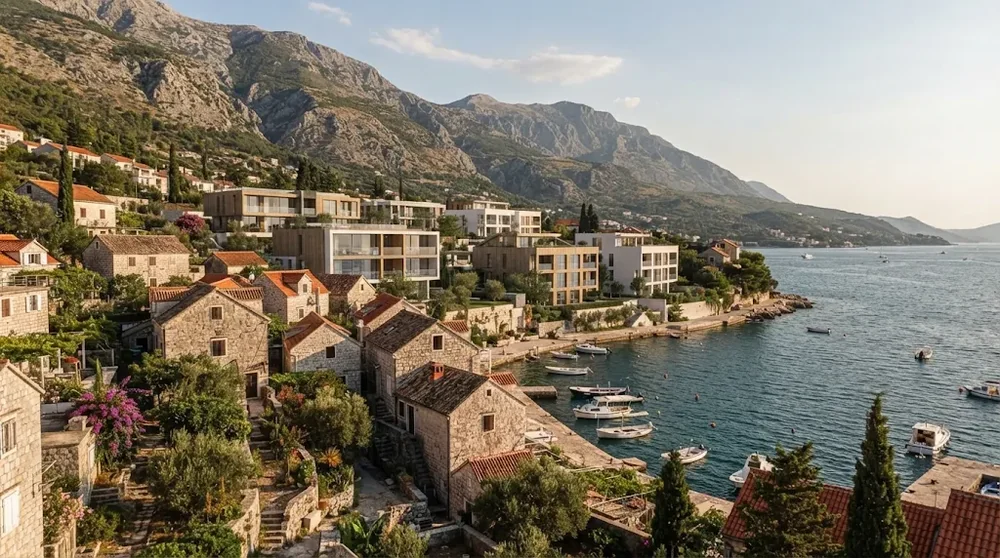
A coastal resort rewards summer use but can feel empty and under-serviced in winter, while a year-round neighbourhood has shops, schools and neighbours throughout the year. An existing street in the Bay of Kotor is easier to assess than an unfinished development: you can walk it in January, see how the water drains in a storm and speak to people who live there. Managed new-build developments offer security, shared facilities and professional upkeep, at a price in service fees. On the Luštica peninsula, a managed resort apartment is a different product from a village plot a few minutes away, even though both carry the same place name.
If you are unsure which area fits your budget and way of living, a structured shortlist can narrow the field before any viewing trip.
Use any shortlist as a starting point for your own checks, and visit each area at the time of year when you expect to be there.
Which Property Has Lower Long-Term Ownership Costs?
Neither type is cheaper to own by default. A new build often has low repair costs in the first years but can carry managed-development charges for shared amenities, while an older property may have lower fixed charges but intermittent capital works such as roof, façade, wiring or damp treatment. The framework below lets you compare them on your own numbers; I have not invented market returns.
| Cost category | New build | Resale | Your annual figure |
|---|---|---|---|
| Property tax | Local, per property | Local, per property | Confirm with the municipality |
| Service or management fee | Often higher if amenities are shared | Lower, sometimes none | Ask for the current budget |
| Utilities | Modern systems, possibly lower use | Depends on insulation | Ask for twelve months of bills |
| Insurance | Per quote | Per quote | Compare cover, not only price |
| Repairs reserve | Warranty period, then ageing | Capital repairs likely | Set a reserve from the survey |
| Cleaning and key-holding | Per property | Per property | Quote for absences |
| Vacancy and seasonality | Depends on location and use | Depends on location and use | Assume gaps, not constant occupancy |
| Selling costs | Agent, legal, possible tax | Agent, legal, possible tax | Plan the exit at purchase |
Is a new build easier to rent out?
A new build may present well to short-term guests and tenants, thanks to modern fittings and managed facilities, but this is not a guarantee. Occupancy depends on location, season, licensing and management quality, and any projection should use cautious assumptions rather than a developer’s brochure. Long-term letting follows a different pattern, with a quieter market outside the resort areas, so the property’s year-round setting matters.
Which property could be easier to resell?
Resale liquidity depends on price, location, documentation and condition more than age. A clean cadastral record, matching plans and a documented building history help any sale, and a buyer’s lawyer will ask the same questions you asked. I would not assume profit or capital growth for either type.
How Should You Choose Before Paying a Deposit?
A deposit should be the last step of a decision procedure, not the first. Follow this sequence for every property on your shortlist.
- Define use and timing: how many weeks a year you will be there, whether you will rent it out, and when you need it ready.
- Shortlist comparable properties: similar size, area and condition, so the comparison is fair.
- Appoint independent advisers: a Montenegrin lawyer and, for older homes or completed units, a surveyor or engineer.
- Verify title and authority: a current list nepokretnosti, the seller’s powers, and the permits.
- Check construction status: finished, partly built or planned, with evidence.
- Obtain the technical inspection and a costed repair or snagging list.
- Build the same all-in budget for each property, using the matrix in the tax section.
- Test annual running costs against the five-year framework.
- Review the contract: reservation terms, payment milestones, refund and termination clauses.
- Document completion and registration: who registers the transfer, by when, and how you will receive the final extract.
Walk away if you meet any of the following:
- ownership or seller authority that cannot be resolved;
- missing building or use permits;
- undocumented alterations the seller will not address;
- unclear construction milestones or no stated completion date;
- pressure to pay a non-refundable amount before the checks are done.
| Buyer priority | Often worth considering | Main caution |
|---|---|---|
| Ready to use soon | Completed, registered new build or documented resale | Snagging or hidden defects |
| Renovation enthusiast | Older resale or stone house | Scope, permits and cost overruns |
| Remote owner | Managed new build with clear service terms | Service charges and management quality |
| Risk-averse buyer | Registered completed property you have inspected | Do not skip legal review because it looks simple |
What should be verified before transferring a reservation fee?
Before you pay a reservation fee, make sure you know whether it is refundable, under what conditions, and who holds it. Ask your lawyer to check the seller’s identity, the extract and the permits first, and to put the fee terms in writing. If the seller or developer insists on payment before any checks, treat that as a warning sign, not a deadline.
Frequently Asked Questions About Montenegro Property
Is it better to buy a new-build or resale property in Montenegro?
A completed new build may suit buyers who want modern systems, less immediate renovation and managed facilities. A resale property may be preferable if you value an established neighbourhood and want to inspect the finished home. Neither is inherently safer or better value. Compare legal status, taxes, technical condition, total ownership costs and your intended use before deciding.
Do I pay property transfer tax on a new-build apartment in Montenegro?
A qualifying first sale by a VAT-registered developer is generally subject to VAT rather than property transfer tax, with VAT normally incorporated into the advertised price. Resale transactions commonly attract progressive transfer tax. The correct treatment depends on the seller and the actual taxable supply, not merely whether the apartment looks new. Verify the current rules and contract with a Montenegrin tax professional.
Can British and American citizens buy property in Montenegro?
British and American citizens can generally purchase residential apartments and houses in Montenegro, subject to the applicable restrictions and checks for the particular property and land category. Citizenship alone does not establish a right to residence. Before signing, have a local lawyer verify ownership eligibility, title, the transaction structure and any relevant immigration requirements independently.
Is buying an off-plan apartment in Montenegro riskier than buying a completed home?
Off-plan purchases add construction, financing, completion and registration risks because the finished apartment may not yet exist as a separately registered unit. Review the developer’s authority, land title, permits, payment milestones, specifications, delay remedies and registration arrangements before paying. Independent legal review and appropriately documented payment safeguards are especially important; do not assume a guaranteed completion date or refund.
What documents should I check before buying a resale property in Montenegro?
Start with a current cadastral extract, the seller’s authority, ownership history, registered burdens, building permissions and documentation for alterations or extensions. Match the recorded floor area and unit identification with the physical property. An independent lawyer should review legalisation or dispute annotations, while a surveyor assesses structural condition, moisture, electrical systems and likely repair costs.
Are new-build apartments in Montenegro more expensive than resale apartments?
Some listing comparisons show a new-build premium, but the amount depends on location, specifications and sample selection. A November 2026 Fijaka analysis reported median asking prices of €3,180/m² for classified new builds and €2,500/m² for classified resale flats, using unequal samples. These figures are not national transaction averages. Compare equivalent homes and include taxes, furnishing, repairs and ongoing charges.
Final Decision: Match the Property to Your Priorities
I would consider a properly registered, completed new build where a low renovation workload and managed facilities matter most. I would look at a documented resale where location, character and the ability to inspect everything before paying count for more. Off-plan deserves the most caution: approach it only with independently reviewed protection against delay and registration risk.
Whichever you prefer, compare real total costs rather than headline prices, and treat the legal status of each property as a fact to be checked, not assumed. Living in the Bay of Kotor for seven years has convinced me that a few weeks of careful checking costs far less than a mistake discovered after completion. Take independent legal, tax and technical advice before you pay any reservation fee.
Disclaimer: this article is general information as of November 2026, not legal, tax, financial or investment advice. Laws, tax rates, statistics and market conditions change, and every transaction is different. Verify all figures with official sources and consult qualified Montenegrin professionals before committing. No profit, rental income, occupancy, residence rights or successful legalisation can be guaranteed.