In the Bay of Kotor, a stone house that feels bright on an autumn afternoon can sit in shade for much of a winter day, and on Budva’s streets balconies are often enclosed one by one, each owner solving a private problem in a slightly different way. A viewing is where these coastal realities show themselves, but only if every observation is matched to documents and tested before you pay a reservation fee. This is how I would structure a viewing for an investment purchase, from the first damp corner to the conditions in a reservation agreement.
An investment property viewing checklist for Budva and Kotor should cover the building’s condition, registered ownership, permits, access, shared maintenance and rental suitability. Match the apartment, parking and terraces to official records, test utilities, investigate damp and obtain operating evidence. Arrange independent legal and technical checks before signing or paying a reservation fee.
Your Investment Property Viewing Checklist
Most buyers arrive at a viewing with a list of physical things to notice and leave with a separate list of documents to request. The two rarely meet, and that is where problems slip through. An investment property viewing checklist works best as a single worksheet: each observation is tied to the evidence that would explain it, the person qualified to interpret that evidence and the next action you will take.
The twelve checks below are in rough priority order. The first three concern whether the property you are viewing is legally the property being offered; if those fail, the condition of the kitchen hardly matters.
| # | Check | What to observe | Evidence required | Responsible person | Next action |
|---|---|---|---|---|---|
| 1 | Legal identity | Which apartment, terrace, storage room and parking space are actually offered | Current List nepokretnosti, cadastral identifiers, plans | Independent lawyer | Compare identifiers before any reservation |
| 2 | Seller authority | Whether every registered owner is party to the sale | Ownership entries, identity documents, power of attorney or company authority | Independent lawyer | Confirm authority in writing |
| 3 | Permits and legalisation | Added floors, enclosed balconies, merged units, converted lofts | Construction and use permits; legalisation decision or application status | Lawyer, with architect if needed | List each discrepancy |
| 4 | Damp | Staining, salt deposits, musty odour, fresh patch repairs | Repair history, specialist report | Surveyor or engineer | Refer persistent or recurring signs |
| 5 | Structural warning signs | Cracks, uneven floors, sticking doors, corroded balcony fixings | Engineer’s report | Structural engineer | Pause if signs are significant |
| 6 | Utilities | Water pressure, hot water, heating and cooling operated on request | Recent bills, installation records where available | Seller; plumber or electrician | Note faults; obtain quotations |
| 7 | Access | Steps, gradient, distance from road, route with luggage | Your own timed observations | Buyer and agent | Repeat at a different time |
| 8 | Parking | Whether the space is owned, shared or merely used | Cadastral identifier for the space; building rules | Lawyer and building manager | Confirm the right in writing |
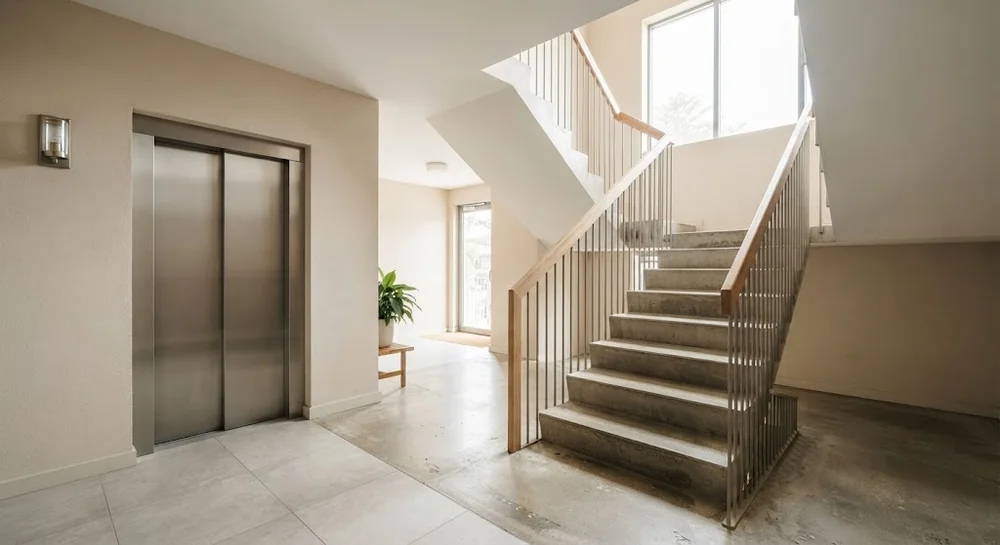
| 9 | Shared areas | Stairwell, roof, lift, pool, retaining walls | Service-charge statements, minutes, reserve information | Building manager; lawyer | Request records; flag planned works |
| 10 | Noise and sunlight | Evening noise, nearby works, winter sun path | Repeat visits; municipal planning information | Buyer and agent | Visit in the evening and out of season |
| 11 | Rental operation | Check-in, layout, escape route, internet, laundry | Permitted use, current registration route, operating records | Municipality or rental-compliance adviser | Confirm the route for your model |
| 12 | Costs and reservation terms | Annual charges, taxes, insurance, deposit conditions | Draft reservation agreement; cost statements | Lawyer and tax adviser | Agree refund conditions before paying |
Add your own observations column when you print this, and write “unknown” wherever you could not confirm something. An unknown is not a defect, but it is also not a pass. A worksheet full of honest unknowns tells your lawyer and engineer exactly where to spend their time.
Before the Viewing: Request the Property File
The first document I ask for is the current List nepokretnosti, the property folio that records the parcel, the building, individual units, the registered owners and any annotations such as mortgages or disputes. Montenegro’s real estate cadastre has long been administered by Uprava za nekretnine, the Real Estate Administration; government reorganisations can change the name of the competent office, so your lawyer should confirm which body currently issues certified extracts. The public E-Katastar viewer lets you look up parcels and units online, which is useful for preliminary research before you travel.
Ask the seller or agent for a property file containing the following, ideally a few days before the viewing:
- Cadastral identifiers: the municipality and cadastral district, parcel number, building number and the unit designation for the apartment and every ancillary space.
- A current List nepokretnosti: recent enough that your lawyer is comfortable relying on it, and later re-obtained independently by that lawyer rather than accepted only from the seller.
- Plans: floor plans and, where available, the plan of special parts of the building showing the unit’s boundaries.
- Construction and use permits: the documentation that applies to the building and any later works, which will differ for an older building, a recent development and a house extended over decades.
- Legalisation evidence: where any part of the property was built or altered without approval, the application, its procedural stage and any decision issued.
- Seller authority: identity documents, inheritance decisions, powers of attorney or company resolutions, depending on who is selling.
This house has a story — and so does its paperwork. At the viewing, carry the plans and walk them. Count the rooms, find the terrace and stand on the parking space. A terrace or parking space used with the apartment is not necessarily registered with it. Storage rooms in the basement are a frequent example: the key may come with the sale while the cadastral entry places the room in common ownership, or in someone else’s name. Note every mismatch between what you see and what the documents describe.
Keep two kinds of research separate. Looking up a parcel on E-Katastar, reading a seller’s scans or comparing plans yourself is preliminary research. It helps you decide whether a property is worth pursuing. It is not a legal review. A Montenegro-qualified lawyer acting only for you should obtain the records independently, check annotations and seller authority, and explain how any gaps affect the transfer. I am not aware of a single fixed validity period for extracts that applies to every purpose, so ask your lawyer and the notary what date they need.
Legalisation deserves its own instruction. As of October 2026, the government-hosted consolidated text of the Law on the Legalisation of Unauthorised Buildings (Zakon o legalizaciji bespravnih objekata) includes amendments adopted in August 2026, and its Article 33 addresses restrictions on transferring and using for business purposes buildings caught by the legalisation regime, together with exceptions and transitional operation. Ask your lawyer and the notary to assess, for this specific unit, how Article 33 applies, what annotations appear on the List nepokretnosti and whether any exception or transitional provision is relevant. A pending legalisation application does not by itself establish that the unit can be transferred or let. Keep one distinction clear as well: a structure built without approval is a different matter from a building constructed under a valid permit that is still waiting for its use permit, and the two are assessed differently.
Inspect Damp, Structure and Building Services
A viewing allows you to observe; it does not allow you to diagnose. Work through the steps below with the seller’s permission. Each one names a safe test, the sign that passes the job to a professional and the evidence to collect. Ask before you open windows, run taps or switch on equipment, and leave anything locked, sealed or unsafe alone.
- Smell the air before anyone opens a window. A musty odour in a closed apartment is the first clue you will get. Referral trigger: a persistent smell that returns after airing. Evidence: a note of where it was strongest and how long the property had been closed.
- Look for moisture where it hides. Check room corners, behind furniture you are permitted to move, window reveals, wardrobes and the base of walls for staining, tide marks, white salt deposits, flaking paint, blackened sealant and freshly painted patches in otherwise older rooms. On paper this looks fine, but in reality a stain can come from condensation, a leak from the flat above, rising moisture, a failed gutter or a long-closed apartment. The appearance of damp does not reveal its cause. Referral trigger: persistent or recurring moisture. Evidence: dated photographs, repair history and a report from a surveyor or engineer able to take readings and trace the source.
- Test ventilation. Check that bathroom and kitchen extraction works and whether bedrooms can be aired without opening onto a noisy street. Referral trigger: no working extraction alongside damp signs. Evidence: your notes and any installer records.
- Read stone walls with patience. Having restored an old stone house of my own before moving to Kotor about seven years ago, I read walls and files with the same care. Whether a renovation used materials compatible with the original masonry, and whether the wall can still manage moisture, is a question for a specialist familiar with traditional construction; I would not assume that any single render, plaster or paint suits every stone wall. Referral trigger: cement-based finishes over old masonry with staining behind them. Evidence: a specification of the renovation materials, if the seller has one.
- Check walls, floors and doors. Look for diagonal cracks near window and door corners, gaps between walls and ceilings, sloping floors and doors that bind. Referral trigger: significant cracking, or alterations that may have removed walls. Evidence: a structural engineer’s report before you commit.
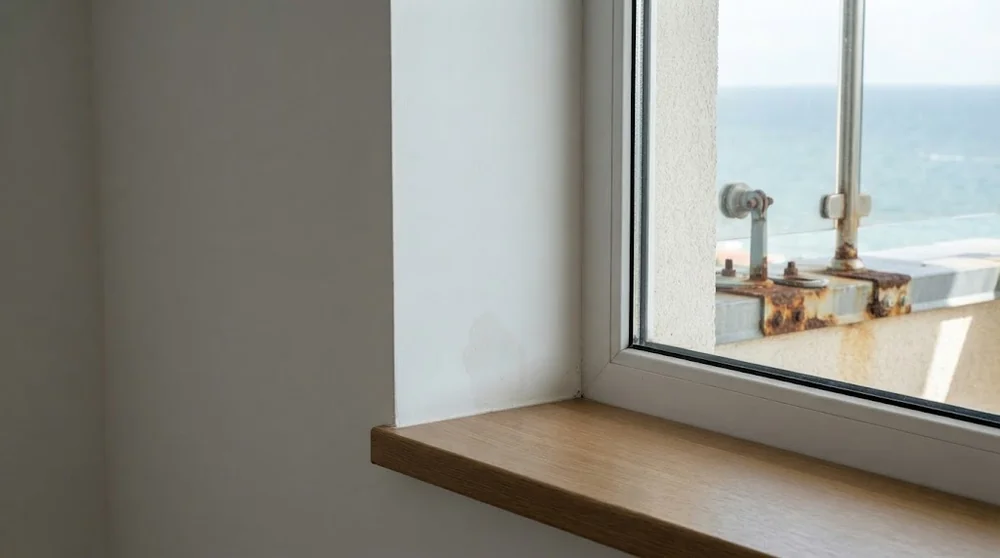
- Inspect balconies and terraces from safe positions. Look at the underside, the edges and the railing fixings for rust staining, spalling or exposed reinforcement, and see whether water drains away or stands. Do not lean over railings. Referral trigger: corroded fixings or exposed steel. Evidence: an engineer’s assessment.
- Assess the roof without climbing it. From inside, check top-floor ceilings for stains. Do not go onto roofs or into loft spaces without safe access. References to a 1981 building code sometimes appear in listings as shorthand for safety, but neither that date nor any construction year establishes how a particular building performs, and a cosmetic renovation can conceal problems as easily as it can follow sound repairs. Evidence: photographs, maintenance records or an inspection by someone equipped to do it.
- Run the water and drains. Run the taps and shower together, watch the pressure and time the hot water. Flush the toilet, watch the drains and look under sinks for corrosion and water marks. Referral trigger: slow drains, low pressure or active leaks. Evidence: recent bills and a plumber’s quotation.
- Observe the electrics and heating without touching the installation. Operate accessible heating and air-conditioning controls, note the condition of sockets and switches and ask whether certification or installer records exist. Never open the distribution board, remove covers or test wiring yourself. Referral trigger: scorch marks, tripping circuits, extension leads used as permanent wiring or a seller unsure when the installation was last updated. Evidence: a qualified electrician’s report and quotation, which then goes into your budget.
A viewing tells you which questions to ask. It does not answer them. When a buyer tells me a crack “looks old”, I suggest we let an engineer decide how old, and whether it matters.
Budva and Kotor: Check the Exact Location
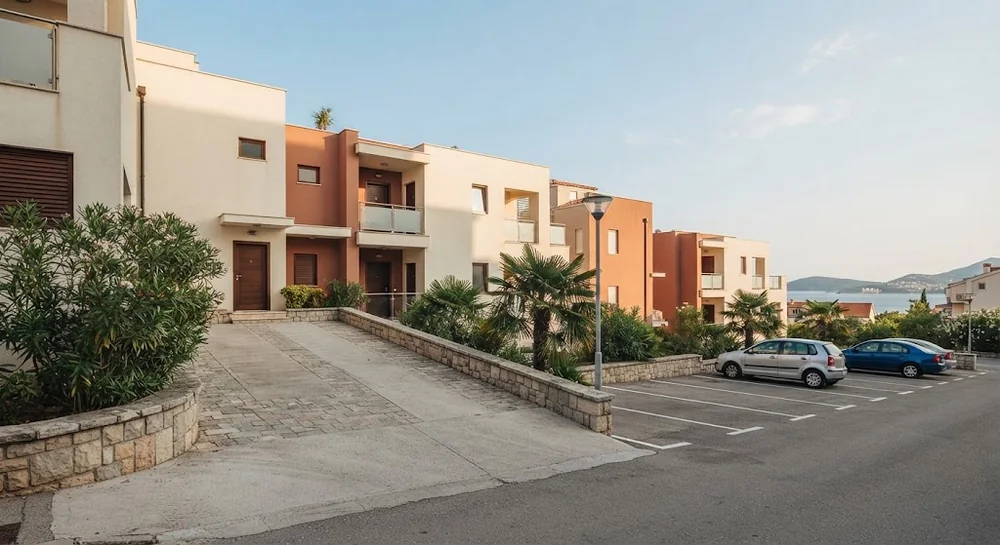
Reputation is a poor substitute for observation. Two apartments a few minutes apart in Budva can differ completely in evening noise, and two houses on the same slope above the Bay of Kotor can differ in winter sun by hours. A Budva property viewing checklist and a Kotor property inspection checklist share most items, but the emphasis shifts. The table sets out what to test in each, without suggesting that one town is the better investment.
| Factor | Budva: what to test | Kotor and the bay: what to test | Evidence to gather |
|---|---|---|---|
| Noise | Evening and weekend noise from bars, roads and neighbouring rentals | Road traffic along the shore, church bells, cruise-season footfall where relevant | Repeat visits at night; your own recordings |
| Nearby works | Construction sites and vacant plots likely to be built | Renovations in adjoining houses; works on shared walls | Municipal planning information; questions to neighbours |
| Parking | Owned space or competition for street spaces | Distance between road and door; whether any space exists | Cadastral entry; building rules |
| Luggage access | Guest drop-off point, lift, entrance steps | Steps, steep paths and narrow lanes with luggage | Walk and time the route yourself |
| Winter sunlight | Shade from taller neighbouring buildings | Shade from the hillside or neighbouring walls on the specific parcel | A winter visit; observations at several times of day |
| Ventilation | Whether windows face a noisy street | Cross-ventilation in thick-walled, closely built houses | Damp observations; specialist report if needed |
| Road exposure | Traffic on main routes in summer | Proximity to the shore road; rockfall or retaining-wall concerns raised in records | Visual observation; management or municipal information |
| Heritage constraints | Check any protection status for the specific parcel | Whether the parcel lies within the UNESCO World Heritage property or its buffer zone | Lawyer and competent heritage and planning authorities |
The heritage row needs care. Kotor’s UNESCO World Heritage property and buffer zone affect what can be altered on some parcels, but UNESCO does not issue local renovation permissions; the competent Montenegrin heritage and planning authorities do, and the constraints depend on the exact parcel and building. If you plan to renovate, ask your lawyer and an architect to establish the position before you rely on any assumption about windows, roofs or extensions.
Visit at least twice, ideally once in the evening and once on a different day of the week. A quiet daytime viewing in October cannot establish what the street sounds like in August. If you are planning an out-of-season trip from the UK, the UK government’s travel advice for Montenegro covers entry requirements and practical matters. Rather than trusting quoted travel times, walk or drive the routes to the beach, the old town, a supermarket and the nearest bus stop yourself, and write down how long each took and at what time.
Inspect Building Management and Shared Liabilities
Title checks receive most of the attention in Montenegro property due diligence, yet many unpleasant surprises arrive through the building rather than the apartment. When you buy a unit, you usually buy into shared responsibility for parts of the building you do not control. A roof, a façade or a retaining wall above a road can carry a repair bill that dwarfs a new kitchen.
Ask building management, or the owners’ association where one exists, for the following:
- Recent service-charge statements showing what the unit pays and what the charge covers, such as cleaning, lift maintenance, pool operation, insurance or security.
- Arrears information for the unit and, where available, an indication of whether the building as a whole is collecting charges reliably.
- Reserve balances, if a reserve exists, and how it is held.
- Meeting minutes from recent years, which often reveal disputes, leaks and postponed decisions more candidly than any listing.
- Planned repairs and any agreed or proposed special contributions for roofs, façades, lifts, pools, retaining walls, drainage or access roads.
- Maintenance contracts for lifts, pools and other shared equipment.
Then establish what is private, what is shared and what is merely used informally. A sea-view roof terrace might be part of the apartment, a common area the seller has occupied for years, or a space other owners intend to reclaim. An access road might be public, jointly owned or crossing a neighbour’s parcel without a registered right. Informal use is not ownership, and it can end when a neighbour sells or a new manager arrives.
Ask your lawyer to establish whether existing debts or approved contributions affect the buyer, and request written confirmation from building management where it can be provided. If no management structure exists at all, treat that as information: someone will eventually have to organise and pay for the roof.
Can This Property Operate as a Rental?
Rental suitability is often discussed as a separate topic after the purchase. I prefer to test it during the viewing, because a layout, a staircase or a building rule can decide whether a rental plan works long before anyone runs the numbers. A Montenegro rental property inspection should connect permitted use, current requirements and the practical reality of guests arriving with suitcases.
Work through these steps for each shortlisted property:
- Define the rental model. Short-term holiday letting, seasonal letting and long-term residential letting can involve different requirements, costs and management arrangements.
- Confirm lawful use. Ask your lawyer whether the registered and permitted use of the unit is compatible with your intended model, particularly where a space has been converted. Where any part of the building is subject to legalisation, ask specifically whether the business-use restrictions in Article 33 of the legalisation law, as amended in August 2026, affect letting this unit.
- Establish the current accommodation route. Tourist accommodation registration, categorisation and guest-registration duties depend on the type of accommodation and current municipal and national rules. Ask the competent municipality or a qualified rental-compliance adviser to confirm the correct route for this specific property and model, rather than assuming every tourist rental follows identical categorisation requirements.
- Check transferability. Do not assume that the seller’s existing approval, registration or listing passes to you. Confirm whether the change of owner or operator requires a new approval, registration or amendment for this accommodation category.
- Read the building arrangements. Check whether house rules, management decisions or shared-use agreements restrict short-term letting, key boxes or pool use by guests.
- Test arrival on foot. Walk from the likely drop-off point to the door with luggage in mind, and consider late-night check-in, lighting and how guests will find the entrance.
- Look at safety and services. Identify the escape route, check whether internet service is available and adequate, and see where laundry, linen storage and cleaning supplies would go.
- Request operating evidence. If the property has been rented, ask for unit-specific records such as booking statements, invoices and cleaning costs, each dated by the period they cover and broken down by month, and a copy of any management contract.
When you read a management contract, look at the fee basis, who sets prices, owner-use restrictions, cleaning and linen charges, repair authority and the notice period for leaving. Be honest about seasonality: coastal rental income is uneven across the year, and a summer booking calendar says little about February. MONSTAT, the national statistics office, publishes monthly tourist arrival and overnight-stay figures that show how strongly the coast concentrates around summer. Seller projections are not operating evidence.
Turn Viewing Findings into an Investment Budget
The viewing worksheet becomes useful only when it reaches the budget. I separate four layers, because they behave differently: acquisition costs are paid once, immediate works are paid soon, furnishing is a one-off set-up cost, and operating costs return every year.
| Budget layer | What it includes | Where the figure comes from |
|---|---|---|
| Acquisition | Price, transfer tax or VAT as applicable, notary, cadastral registration, legal and translation fees | Written calculation from your lawyer and tax adviser |
| Immediate works | Repairs identified at the viewing and confirmed by specialists | Contractor quotations based on specialist reports |
| Furnishing and set-up | Furniture, linen, equipment, safety items, photography, initial registration costs | Itemised quotations |
| Annual operation | Service charges, utilities, property tax, insurance, management, cleaning, platform fees, routine maintenance | Management statements, bills, contracts and quotations |
On transfer tax: as of October 2026, Montenegro’s tax on the transfer of resale property is progressive rather than a flat 3%. Amendments published in the Official Gazette of Montenegro no. 28/23 on 10 March 2023 apply from 1 January 2024: 3% on a tax base up to €150,000; €4,500 plus 5% of the amount above €150,000 for a base up to €500,000; and €22,000 plus 6% of the amount above €500,000. On a €250,000 resale, for example, that gives €9,500. A first sale by a VAT-registered developer is generally subject to VAT rather than transfer tax, but do not assume that every new-build contract receives identical treatment. The tax base, exemptions and the classification of your transaction need a written, transaction-specific calculation from your lawyer or tax adviser.
Net operating income (NOI) is the rental income actually collected, minus the costs of operating the property, before finance costs and income tax. It excludes mortgage interest and capital repayments, and it should exclude weeks you reserve for your own use rather than counting them as income.
Here is an illustrative example, using assumptions rather than market evidence. Collected rent of €18,000 for the year, less operating costs of €7,000, gives an NOI of €11,000. I then set aside a separate capital reserve of €2,000 for future replacements and shared repairs, which leaves €9,000 before finance and income tax. The reserve does not make a future roof contribution cheaper; it means the money is already put aside when the bill arrives. Count each shared repair once only: either as an operating cost in the year it is paid, or as a draw on the reserve you have been building, never both.
The annual figure hides the winter. The worksheet below spreads the same illustrative year across four seasons, with two weeks of owner use in summer excluded from rent.
| Season (illustrative) | Collected rent | Owner use | Fixed costs | Variable costs | Reserve contribution | Cash result |
|---|---|---|---|---|---|---|
| January–March | €600 | None | €1,000 | €150 | €500 | −€1,050 |
| April–June | €4,400 | None | €1,000 | €900 | €500 | €2,000 |
| July–September | €11,500 | Two weeks, no rent counted | €1,000 | €1,700 | €500 | €8,300 |
| October–December | €1,500 | None | €1,000 | €250 | €500 | −€250 |
| Year | €18,000 | €4,000 | €3,000 | €2,000 | €9,000 |
All figures are assumptions. Fixed costs here stand for service charges, insurance, property tax and standing utility charges; variable costs for cleaning, linen, platform fees and consumption. In this example the owner needs roughly €1,300 of cash to carry the property from October to March before summer income arrives. Replace each line with figures from the management statements, bills and quotations you collected.
To compare properties, use the all-in capital as the denominator: price plus acquisition costs, immediate works and furnishing. Name each metric. With an assumed all-in capital of €250,000, the NOI yield is €11,000 ÷ €250,000 = 4.4%, and the reserve-adjusted return is €9,000 ÷ €250,000 = 3.6%. The asking price alone is the wrong denominator, because a cheaper apartment needing major works can require more capital than a dearer one ready to let.
Proceed, Renegotiate or Pause Before a Deposit
This is where most first-time buyers slip up: they treat every finding as a price adjustment. Some findings can be priced. Others cannot, because nobody yet knows what they will cost or whether they can be resolved at all.
| Decision | Typical findings | Evidence required | Condition before money moves |
|---|---|---|---|
| Proceed | Title, authority and permits consistent with what you saw; no significant technical warnings | Lawyer’s written review; specialist reports where any doubt arose | Reservation agreement reviewed by your lawyer, with refund triggers and deadlines |
| Renegotiate | Minor defects; worn finishes, appliances or air-conditioning units; known building contributions; set-up costs | Specialist report plus contractor quotation; management’s written confirmation of contributions; itemised quotes | Price or terms adjusted in writing to reflect quoted figures |
| Pause | Title discrepancies, missing co-owners or unclear seller authority | Updated List nepokretnosti; authority documents | Lawyer confirms every registered owner is bound and identifiers match |
| Pause | Parking, terraces or storage not registered as described; access relying on informal use | Cadastral entries or a registered right for each space and route | Registration corrected, or price and scope rewritten to exclude the item |
| Pause | Permitted-use or legalisation questions, including Article 33 restrictions | Legalisation decision or lawyer’s written opinion on transfer and business use | Lawyer and notary confirm the unit can be transferred and used as intended |
| Pause | Structural warning signs not yet assessed | Structural engineer’s report | Engineer finds no serious defect, or repair cost is quantified and agreed |
Scoring systems help with comparison, but no score can override a serious unresolved legal or safety concern. A property that scores highly on view, light and price, but has an unresolved title issue, is not a high-scoring property. It is a paused one.
Assemble an evidence pack before discussing terms: dated viewing notes, photographs taken with consent, all cadastral identifiers, a list of outstanding documents, professional reports, repair quotations and the draft reservation agreement. Then give it to your lawyer.
Not sure whether your shortlisted property is ready to proceed, needs renegotiation or should be paused? Take my short pre-reservation quiz to see which checks are still open.
Before you pay a reservation fee, make sure your independent lawyer has reviewed the agreement and specified the refund triggers, the deadline for each check, who receives the money, the conditions under which it is released and what happens if a check fails. The Central Bank of Montenegro publishes the banks licensed to operate in the country, which helps when you are checking where a deposit will be held. Paying a reservation fee into an account whose holder you cannot identify is a risk no discount justifies.
Frequently Asked Questions
What should I check when viewing an investment property in Montenegro?
Check moisture, visible defects, heating, cooling, water pressure, drainage, windows and access, then inspect the shared building areas. Match the apartment, terrace and parking to the legal description. For an investment purchase, also request operating costs, rental evidence and management terms. A viewing identifies questions; independent legal and technical checks establish what those observations mean.
Which documents should I request before paying a reservation fee?
Request the property’s cadastral identifiers, a current List nepokretnosti, relevant plans, construction and use documentation, and evidence supporting any legalisation claim. Ask for seller-authority documents and draft reservation terms. Your independent lawyer should review what is available, identify missing evidence and explain payment and refund conditions before you sign or transfer money.
Does cadastral registration mean the property is fully legal?
Cadastral registration does not by itself establish that every structure, alteration or intended use complies with applicable requirements. The registered description, annotations, permits and any legalisation decision need separate review. An application for legalisation is different from a final decision, and as of October 2026 Article 33 of the legalisation law sets restrictions on transfer and business use with specific exceptions. Ask a Montenegro-qualified lawyer and the notary to explain the specific property’s position.
Do I need an independent building inspection before buying?
An independent inspection is particularly useful where there are cracks, persistent moisture, alterations, older construction or significant shared-building repair exposure. The appropriate scope depends on the property and may require an engineer or other specialist. A brief viewing cannot establish structural safety, and neither an attractive renovation nor a recent construction date replaces property-specific technical evidence.
How can I check whether an apartment can be rented to tourists?
Ask the competent municipality or a qualified local adviser which approvals, registration and categorisation requirements apply to the specific property and proposed rental model. Review permitted use, building arrangements and operational safety. Do not assume the seller’s existing listing or approval transfers to you. Check management terms and guest-registration obligations before relying on projected rental income.
What extra checks matter when buying in Budva or Kotor?
In Budva, investigate the property’s actual noise exposure, nearby construction, parking and guest access. In Kotor and surrounding bay locations, assess winter sunlight, ventilation, road access and any parcel-specific heritage or planning constraints. These are viewing priorities rather than universal defects. Repeat visits and written evidence are more useful than assumptions based on the town’s reputation.
Arrange a Viewing with Clear Next Steps
If you have shortlisted properties in Budva or around Kotor, send me the listing, your intended rental model, your budget and the dates you could view. My role as an agent is to coordinate: obtaining the property file, arranging repeat visits, gathering building information and making sure the questions in this checklist reach the right people.
Prefer a quick conversation first? Message me on WhatsApp with the listing and your preferred viewing dates, and I will tell you which documents to request before you travel.
That coordination does not replace an independent Montenegro-qualified lawyer, an engineer or surveyor, or tax and rental-compliance advice, and I would encourage you to appoint each of them yourself.
Fazit
A good viewing in Budva or Kotor answers three questions in order: is this legally the property being offered, is it physically sound enough to price, and can it operate the way your plan assumes, including through the winter months. Legal identity, seller authority and permits come first, because no view or finish compensates for a flaw there.
Treat every unknown as unresolved until a document or a specialist resolves it. Defects with quotations can be negotiated; unresolved title, legalisation or structural questions mean a pause, and no reservation fee should move until your lawyer has written down the conditions under which it is refunded.
General information only, last reviewed October 2026. This article is not legal, tax, technical or financial advice, and it makes no promise of rental income, returns or outcomes. Laws, procedures and municipal requirements change; confirm every point for your specific property with suitably qualified professionals before signing or paying.