The most expensive mistake I see with investment property in Montenegro is a reservation fee paid on a sea-view apartment before anyone has read its cadastral record. Once a deposit is gone, the buyer’s negotiating position usually goes with it. This guide is for investors who already have a shortlist in Budva, Kotor, Tivat or elsewhere and need to decide which property deserves money, which needs more questions and which should be dropped.
Before buying an investment property in Montenegro, check seven warning signs: unclear ownership, missing building permits, unrealistic rental projections, hidden purchase costs, poor building condition, weak off-plan contracts and limited resale demand. Verify cadastral records, assess year-round rental income and obtain independent legal advice before paying a deposit. A sea view alone cannot establish investment value.
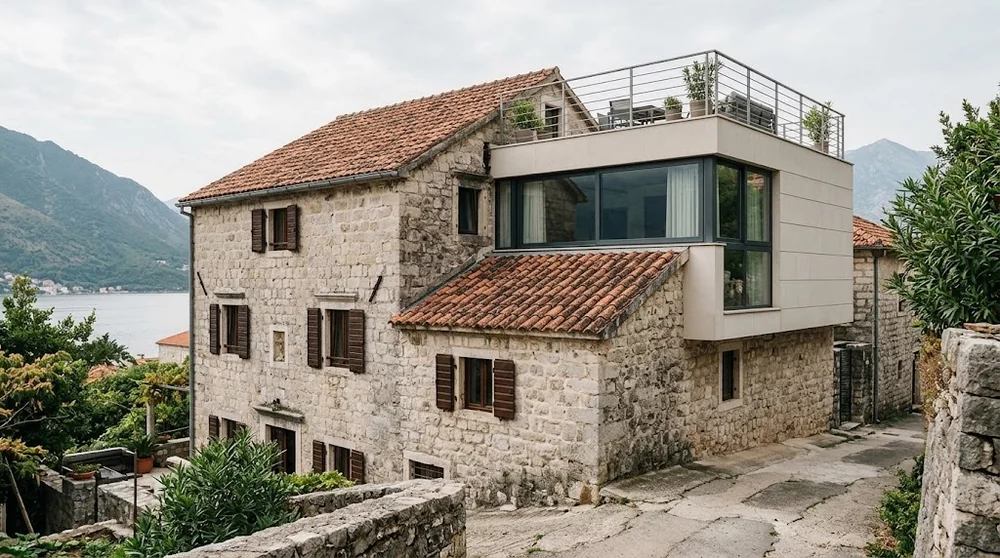
Seven Investment Property Red Flags at a Glance
Buying a home you love and buying an income-producing asset are different exercises. A lifestyle buyer can accept a steep lane, a quirky layout or a quiet winter because the reward is personal. An investor cannot, because every one of those features eventually shows up in rent, occupancy, maintenance or sale price. Investment screening asks four separate questions: can the property be legally transferred, is it physically sound, will it produce a net income after realistic costs, and can it be sold again at a sensible price? A property can pass the first test and fail the other three.
The table below summarises the seven red flags covered in this guide, the evidence that tests each one and the initial decision category it usually falls into.
| Red flag | What to verify | Main investment consequence | Initial decision |
|---|---|---|---|
| 1. Unclear ownership or encumbrances | Current list nepokretnosti, seller identity and authority, mortgages, co-owners | Title may not transfer cleanly; purchase money at risk | STOP until resolved |
| 2. Missing or conflicting permits | Building permit, occupancy permit, legalisation decision, approved plans | Unregistrable areas, restricted transfer, lower resale value | STOP or INVESTIGATE |
| 3. Unrealistic rental income | Booking history, operating costs, seasonality, tax treatment | Net yield far below advertised figure | INVESTIGATE |
| 4. Underestimated costs | Transfer tax or VAT, notary, legal, registration, annual charges | Higher denominator, lower real return | NEGOTIATE or re-price |
| 5. Defective physical condition | Independent survey, waterproofing, corrosion, structure | Repair bills and lost letting weeks | INVESTIGATE, then NEGOTIATE |
| 6. Weak off-plan protection | Land rights, permits, payment schedule, default and refund clauses | Delayed income, capital tied up, possible loss | STOP if unprotected |
| 7. Poor resale liquidity | Local demand, competing supply, access, building rules | Long sale time, discounted exit price | INVESTIGATE |
Three decision categories run through this article. STOP means the problem threatens lawful transfer or the safety of your money, and no price reduction fixes it. INVESTIGATE means the facts are incomplete and need a specialist before you commit. NEGOTIATE means the risk is real but documented and priceable, so it belongs in the price or the contract. The deadline for sorting each red flag into one of these categories is the same: before you pay a reservation fee or sign anything irreversible.
Red Flag 1: Unclear Ownership or Encumbrances
Unclear ownership is the first red flag because a Montenegrin property with a defective or burdened title can absorb your money without ever becoming yours. The first document I ask for is the current list nepokretnosti, the property title sheet issued from the state real estate cadastre. That cadastre was historically administered by the Uprava za nekretnine (Real Estate Administration), and its records can be viewed through the eKatastar portal. The title sheet shows who is registered as owner, which parcel and building the property sits on, the registered area and any recorded burdens.
Read the list nepokretnosti as a set of cross-checks rather than a certificate of safety:
- Match the owner to the seller. The registered owner’s name and share must correspond to the person signing. If a company sells, its current registry extract must show who can sign on its behalf. If an attorney sells under a power of attorney, the document’s scope and validity need checking.
- Match the identifiers. The cadastral municipality, parcel number, building number and separate unit number must match the apartment you viewed, not a neighbouring unit or the whole building.
- Match the area. A 70 m² registered apartment marketed as 95 m² usually means an unregistered terrace enclosure, attic conversion or measurement from a different standard.
- Read the burdens section. Mortgages, court-ordered restrictions, pre-notations of disputes, easements and rights of way appear here when they have been recorded.
- Look for co-owners and inheritance. Several heirs registered in shares, or a deceased person still shown as owner, means every co-owner’s consent or a completed probate is required.
- Check the date of the extract. An extract from three months ago describes the property three months ago.
A hypothetical example shows the problem. An apartment in Bečići has a single registered owner, matching area and no visible defects in the ownership section. On paper this looks fine, but in reality the burdens section records a bank mortgage from a refinancing, and the only vehicle access crosses a neighbouring parcel without a registered right of way. The mortgage can often be cleared from the purchase price through a properly drafted release mechanism; the access issue may affect both letting and resale for years.
An online cadastral view is not a substitute for a fresh, properly reviewed official extract. Some rights, pending disputes, family-law claims or unregistered agreements may not appear in the record at all, which is why your own independent Montenegrin lawyer should review the extract alongside the seller’s title documents. The notary certifies the contract and the parties’ identities, but a notary does not act as your representative.
Signing the contract and owning the property are also two different moments. In Montenegro, ownership passes when the transfer is registered in the cadastre, not when the contract is notarised. Your lawyer should therefore obtain a new extract immediately before completion and confirm registration afterwards.
Action step: request the current list nepokretnosti and the seller’s title documents before any reservation, and treat an unexplained mismatch in owner, unit or burden as a STOP.
Red Flag 2: Missing Permits or Unlegalised Construction
Missing permits are a red flag because a building that physically exists is not necessarily a building that can be lawfully registered, sold, insured or let. This house has a story — and so does its paperwork. In Montenegro, four separate documents tell different parts of that story, and investors often confuse them. The cadastral record shows what is registered. The building permit shows what was authorised to be built. The occupancy (use) permit confirms that the completed structure was approved for use. A legalisation decision shows that an unauthorised structure, or part of one, has been formally regularised. None of these documents automatically proves the other three, and none proves that today’s building matches the approved drawings.
The current framework is the Zakon o legalizaciji bespravnih objekata (Law on the Legalisation of Unauthorised Buildings), published in 2025 in Official Gazette No. 91/25. Parliament adopted amendments on 13 February 2026, which were subsequently published in the Official Gazette of Montenegro; your lawyer should work from the officially published consolidated text. As I read the amended Article 9, as of October 2026, unauthorised buildings captured on the 2018 orthophoto survey and covered by a legalisation application can be legalised where the building has not been extended or raised, meaning its gross area and number of storeys are unchanged compared with that 2018 image. The amendments also require the cadastre to record a note within 40 days of receiving a legalisation decision. How these provisions apply to a specific building, and what transfer or registration consequences follow before a decision exists, is a question for a property-specific lawyer rather than a general rule.
For investors, the practical risk sits in later additions: an enclosed terrace that became a bedroom, a top-floor apartment with an extra mezzanine, a pool, an annexe or a garage converted into a studio. These features often carry the advertised yield, because they add sleeping capacity, yet they are exactly the parts most likely to be unregistered. A useful verification sequence is to compare the approved plans with the cadastral sketch and the physical layout, room by room, then ask the seller to document every difference.
Consider an illustrative case, not a real transaction. A stone house above Kotor is registered as a two-storey building of 110 m². During the viewing, there is a third level under a raised roof and a concrete roof terrace added in the 2010s. If the raised roof post-dates the 2018 orthophoto, the amended law’s condition of unchanged area and storeys may not be met, and the extra space may be impossible to legalise on that basis. The buyer would be paying for square metres that cannot be registered and may have to be removed.
Apartment buyers face a related distinction. An unauthorised extra floor on a multi-unit building does not automatically taint lawfully built units below, but it can complicate building-wide registration, communal decisions and buyers’ financing. A pending legalisation application is not a completed legalisation decision, and a seller’s assurance that “the papers are in process” should be treated as an open risk, not a resolved one.
Action step: ask for the building permit, occupancy permit and any legalisation decision before reserving, and have a lawyer and a licensed surveyor compare them with what physically stands on the plot.
Red Flag 3: Unrealistic Rental Yield Forecasts
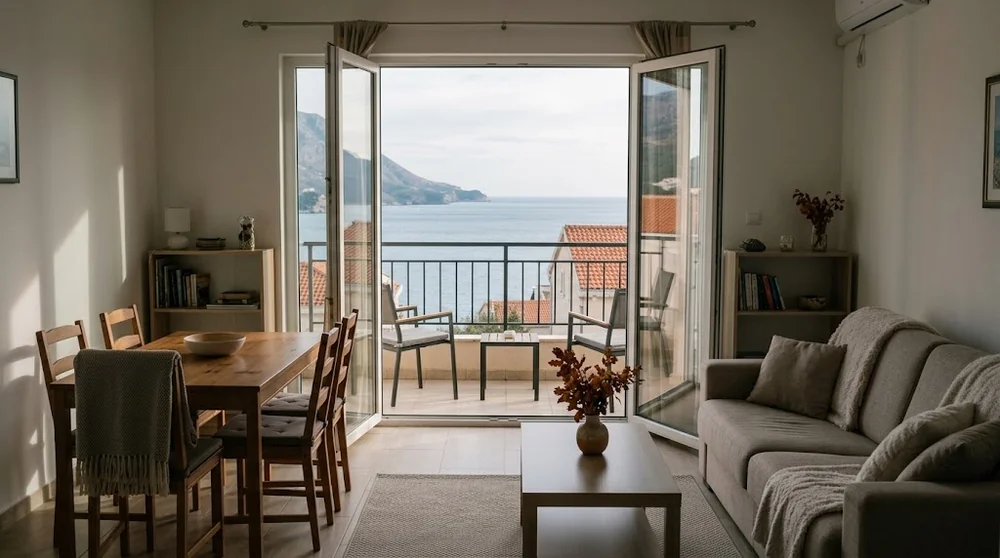
An unrealistic rental forecast is a red flag because Montenegrin holiday-let projections are usually quoted as gross figures that ignore the costs, seasonality and taxes that determine what an owner actually keeps. Three measurements are routinely confused. Gross yield is annual rental revenue divided by the total acquisition cost. Net operating yield is net operating income, meaning revenue minus operating costs, divided by the same total acquisition cost. Cash-on-cash return applies only to financed investors and divides annual cash flow after debt service by the cash the investor actually put in.
The example below is entirely hypothetical. It assumes a total acquisition cost of €200,000, including purchase price, tax and fees, and €14,000 of annual booked revenue for a furnished coastal apartment let short-term. The €14,000 is the revenue actually booked after empty nights, so vacancy is already reflected and is not deducted a second time. If you begin instead from a theoretical full-availability figure, say €20,000, a 70% occupancy assumption produces the same €14,000; you apply the vacancy once, not twice.
| Line item (hypothetical, annual) | Assumption | Amount |
|---|---|---|
| Booked rental revenue | Already net of vacant nights | €14,000 |
| Property management | 15% of revenue | −€2,100 |
| Platform commissions | 5% of revenue | −€700 |
| Cleaning and laundry | Between-stay turnovers | −€1,200 |
| Utilities and internet | Owner-paid | −€1,100 |
| Building service charge | Communal maintenance | −€600 |
| Insurance | Building contents and liability | −€300 |
| Annual municipal property tax | Placeholder; confirm with the municipality | −€250 |
| Routine maintenance | Minor repairs | −€500 |
| Repair and furniture reserve | Replacement fund | −€700 |
| Total operating costs | Sum of the items above | −€7,450 |
| Net operating income (before income tax) | €14,000 − €7,450 | €6,550 |
The arithmetic is reproducible: gross yield is €14,000 ÷ €200,000 = 7.0%, while net operating yield is €6,550 ÷ €200,000 = 3.3%. In this hypothetical case, more than half of the advertised gross return disappears before income tax is considered.
Rental income tax needs separate treatment. The taxable base is defined by the applicable personal income tax rules and permitted deductions, which are not the same as your operating cash costs, and a municipal surcharge may apply. Purely as an illustration, if a 15% rate applied to a taxable base equal to the €6,550 figure, tax would be €982.50, leaving €5,567.50, or about 2.8% after tax. A tax adviser must confirm the actual rate, base, deductions, surcharge and registration obligations for your structure as of the year you let.
Stress tests matter more than the base case. If bookings fall 20% to €11,200, percentage-based costs and cleaning fall too, but fixed costs do not; operating costs drop to about €6,650 and net operating income falls to €4,550, or 2.3%. A single unbudgeted €3,000 terrace repair in the base case cuts the year’s figure to €3,550, or 1.8%. A financed investor with €100,000 of equity and €5,000 of annual interest would see base-case pre-tax cash flow of €1,550, a cash-on-cash return of 1.6%.
Seasonality is the reason these numbers move so much. Coastal holiday lets in Budva, Kotor or Herceg Novi earn most of their revenue between June and September, while long-term rentals trade lower nightly rates for steadier occupancy and lower turnover costs. A developer’s rental guarantee only has value if you know which legal entity owes the payments, for how long, and how the obligation is secured.
Action step: ask for actual booking statements, not projections, and rebuild the figures yourself with a reduced-occupancy scenario before you commit.
Red Flag 4: Underestimated Purchase and Ownership Costs
Underestimated costs are a red flag because every euro spent on acquisition enters the denominator of your yield calculation, and a flat “3% for tax” assumption can be wrong on higher-value resales. The all-in acquisition cost, not the asking price, is the correct basis for any Montenegro investment appraisal.
For qualifying resale transactions, the progressive real estate transfer tax brackets working in 2026, subject to confirmation for the specific transaction as of October 2026, are: 3% up to €150,000; €4,500 plus 5% of the amount above €150,000 up to €500,000; and €22,000 plus 6% of the amount above €500,000. The transfer tax is generally a buyer’s cost, but the contract and the actual tax assessment determine liability. A first supply of newly built property by a VAT-registered developer may instead fall under value added tax, where the ordinary rate is 21%, and VAT is usually included in the developer’s price; the treatment depends on the seller, the transaction and any exemptions, so your lawyer or tax adviser must confirm it.
| Hypothetical qualifying resale price | Calculation (2026 brackets, subject to verification) | Transfer tax | Effective rate |
|---|---|---|---|
| €200,000 | €4,500 + 5% × €50,000 | €7,000 | 3.5% |
| €450,000 | €4,500 + 5% × €300,000 | €19,500 | 4.3% |
Beyond tax, the one-off acquisition costs typically include notary fees for certifying the contract, independent legal review, cadastral registration charges, translation and court-interpreter costs for foreign buyers, any agency commission that your contract makes you liable for, and financing costs such as valuation and arrangement fees. Notary tariffs were revised in 2026, so obtain a written quotation for your transaction rather than relying on older percentages quoted online.
Annual carrying costs are a separate category. The annual municipal property tax is set by each municipality within the band laid down in the national property-tax law, and the rate and base can differ for secondary or unused property. Building service charges, insurance, utilities, management, rental income tax and a reserve for future repairs all reduce net income every year. This is where most first-time buyers slip up: they budget the purchase carefully and then forget that a roof replacement or façade renewal voted by the building’s owners will arrive as a bill, not a suggestion.
Action step: build one spreadsheet with all one-off costs added to the price and all annual costs deducted from revenue, and negotiate the price downward when documented costs exceed the seller’s figures.
Red Flag 5: Coastal Building Defects
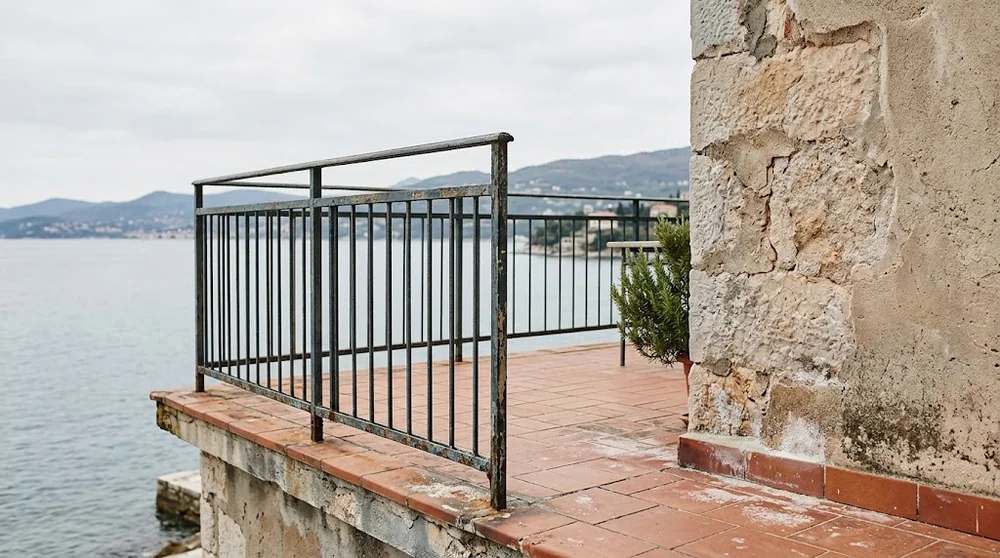
Coastal building defects are a red flag because salt air, heavy autumn rain and hillside construction can produce repair bills and lost letting weeks that no photograph reveals. When I restored my stone house in Kotor, the lesson that stayed with me was how a small brown stain on an interior wall could lead back, through two metres of rubble masonry, to a failed roof flashing and a blocked gutter. Water on this coast always finds the weakest joint.
Different parts of the coast show different patterns. Older Kotor houses tend to have lime-mortared stonework, timber roofs and decades of informal alterations; cement repointing on old stone can trap moisture and drive damp inward. Budva and Bečići apartment blocks are more likely to suffer failed terrace waterproofing, poorly detailed balcony drainage and shared-building systems such as lifts and pumps that need communal funding. In Tivat and Luštica, marine exposure accelerates corrosion of railings, fixings and exposed reinforcement, and resort-style developments can carry substantial maintenance obligations for pools, landscaping and private roads.
Use this compact list during a site visit, ideally after rainfall when feasible:
- Damp tide marks, blistered paint or mould at skirting level, behind wardrobes and in corners of exterior walls.
- Terrace and balcony membranes: cracked tiles, open expansion joints, ponding water and staining on the ceiling below.
- Corrosion on railings, anchor points and balcony slab edges, especially rust-stained concrete that may indicate corroding reinforcement.
- Roof condition: slipped tiles, cracked flashings, rotten fascia timbers and blocked gutters or downpipes.
- Diagonal cracks above doors and windows, or cracking in retaining walls and garden terraces on sloping plots.
- Drainage around the building, surface water paths and whether the plot slopes toward the walls.
- Ventilation in bathrooms and bedrooms, window condensation and any smell of persistent damp.
- Communal areas: lift service records, stairwell condition and the minutes of recent owners’ meetings.
Some items can be estimated by an informed buyer: repainting, replacing a corroded railing section, renewing sealant. Others require a qualified building surveyor or structural engineer: cracking in load-bearing walls, failing retaining walls, corroded reinforcement and recurring water penetration of unknown origin. A repair that takes a holiday apartment off the market for six weeks in summer can cost more in lost revenue than the repair itself. An unexpected owner contribution to a building-wide project can erase a year of net income.
In my experience, the defect that hurts an investor is rarely the one you can see. It is the one that needs opening up, takes two months to fix and lands in July. — Vladislav
Action step: commission an independent technical inspection before reservation, and convert its documented findings into either a price reduction or a contractual repair obligation.
Red Flag 6: Risky Off-Plan Property Contracts
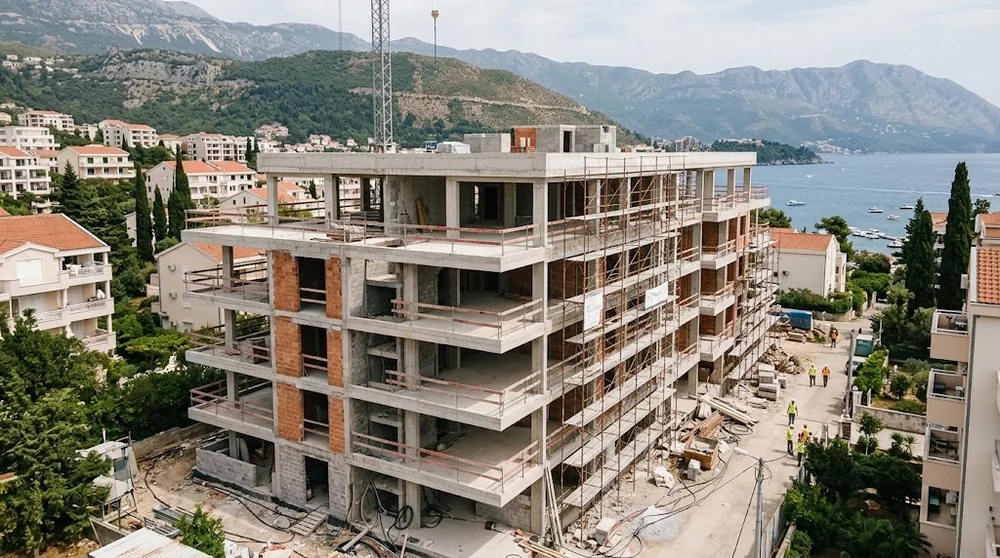
An off-plan contract is a red flag when the buyer pays a large share of the price before the developer’s land rights, permits and delivery obligations are enforceable. Buying a unit that does not yet exist means you are relying on the contract, not on the building, and brochure promises about finish, completion dates or rental income carry no weight unless they appear as binding obligations in the signed agreement.
An independent lawyer should examine the following before any reservation or substantial payment:
- Land rights. The developer, or the landowner in a joint-venture arrangement, must hold registered rights to the parcel, and the list nepokretnosti should be checked for mortgages securing construction loans.
- Construction authorisation. The building permit or equivalent approval must cover the number of floors and units being sold, including your unit.
- Developer history. Completed projects, whether those buildings obtained occupancy permits and whether earlier buyers received registered title.
- Payment schedule. Staged payments should be linked to verifiable construction milestones, not to calendar dates alone.
- Specification and substitutions. A detailed schedule of materials and finishes, with limits on “equivalent” substitutions.
- Completion and handover criteria. A defined completion date, what counts as completion, and the buyer’s right to an independent snagging inspection.
- Default remedies. Penalties for delay, a refund mechanism, the right to terminate, and how any refund is secured.
- Transfer and registration. How and when the unit will be registered in your name once the building is completed and approved.
Escrow accounts, bank guarantees and statutory buyer-protection schemes should not be assumed to exist for every Montenegrin off-plan project. Where a developer offers one, your lawyer should confirm who issued it, what it covers and how it is triggered. Ask also whether any note of your contract can be recorded in the cadastre to signal your interest to third parties.
A hypothetical scenario illustrates the financial exposure. An investor agrees to buy a €220,000 apartment in a new Bar development and pays 80% across four instalments over eighteen months. Completion slips by fourteen months while the occupancy permit is delayed. The investor loses fourteen months of potential rent, has €176,000 earning nothing, and finds the contract’s delay penalty capped at a token amount. Even if the building is eventually finished, the investment’s real return has been permanently reduced, and the investor’s leverage over defects at handover is weak.
Action step: have the full contract, the permits and the land record reviewed independently before paying anything beyond a small, clearly refundable reservation.
Red Flag 7: Weak Rental Demand or Resale Liquidity
Weak demand is a red flag because a property that fills in August but sits empty from November to April, and that few buyers want when you sell, produces a poor investment regardless of its view. Liquidity, meaning how quickly and at what discount a property can be sold, receives far less attention than summer occupancy, yet it decides your exit. The comparison below is qualitative; I do not rank towns by yield, because genuinely comparable, current yield statistics are not available for these locations.
| Location | Typical demand drivers | Seasonality and year-round use | Management and resale considerations |
|---|---|---|---|
| Budva | Beach tourism, nightlife, short stays | Strongly seasonal; some winter residents | Large competing supply of new apartments; building quality varies widely |
| Bečići | Family beach holidays, hotels | Seasonal; quieter off-season | Resort-type service charges; resale depends on beach proximity and building standards |
| Kotor | Heritage tourism, cruise visitors, longer stays | Longer shoulder seasons than beach resorts | Old Town and heritage rules limit alterations; access and parking often difficult |
| Tivat | Marina, airport, international residents | More year-round activity than many coastal towns | Premium buyer pool; high service charges in some complexes |
| Luštica | Resort lifestyle, second homes | Pronounced seasonality outside resort facilities | Narrower buyer pool; heavy maintenance obligations in managed developments |
| Bar | Port, rail link, local and regional buyers | Mixed seasonal and residential demand | Lower price points; buyer pool more domestic and regional |
| Herceg Novi | Regional tourism, retirees, longer stays | Seasonal with steady residential base | Steep terrain and stairs can deter tenants and buyers |
| Podgorica | Capital-city employment, students, diplomats | Year-round long-term rental demand | Long-term rental economics; little holiday-let premium |
Two different buyer pools exist on this coast. The premium resort buyer in Tivat or Luštica pays for facilities and finish but is relatively small in number. The urban long-term tenant in Podgorica or Bar pays less per month but rents for twelve months. Mixing up the two pools is how investors end up with a Luštica unit priced for resort buyers and modelled on Podgorica occupancy.
Micro-location often matters more than the town name. A Herceg Novi apartment reached by 140 steps, a Kotor house with no vehicle access, a Budva unit above a late-night bar or a block without parking all face weaker rents and a slower sale. Restrictive building rules, such as bans on short-term letting written into a complex’s regulations, can remove part of the buyer pool entirely. Before settling on a location, it helps to compare several areas against your budget, letting strategy and holding period rather than against summer photographs alone.
If you are weighing Kotor against Tivat, or a holiday let against a year-round tenancy, a short structured questionnaire can match your budget and investment goals to locations worth shortlisting.
Get a shortlist of Montenegro properties matched to your goals
Exit costs also belong in the appraisal from the first day. Agency commission on sale, any capital gains tax applicable to your holding period and structure, and several months of carrying costs while the property is marketed all reduce the final return, and the shorter the holding period, the more these costs weigh on the result.
Action step: count competing listings in the same building and street, ask how long comparable units took to sell, and model a sale at a discount after a realistic marketing period.
How to Check Montenegro Investment Property Prices
Checking price is a separate task from checking title, and the most common error is treating an official average as a valuation. According to the Statistical Office of Montenegro (MONSTAT), in its release published on 20 August 2026, the average price of dwellings sold for the first time in new residential buildings in Q2 2026 was €2,557 per square metre for Montenegro, €2,838 per square metre for the coastal region and €2,510 per square metre for Podgorica.
Those MONSTAT figures describe first sales of new-build dwellings under the official survey methodology. The MONSTAT Q2 2026 figures are not resale prices, not portal asking averages and not a valuation benchmark for any individual street. The coastal figure blends very different markets, so it cannot be used as a precise estimate for a particular Tivat penthouse or a Kotor stone house. Asking prices on listing portals reflect sellers’ hopes, not completed transactions, and the gap between asked and achieved prices varies by location and season.
A useful comparable property shares the subject property’s micro-location, legal status, registered area, building age, condition, finish and furnishing, transaction type and a recent transaction date. Build a simple worksheet with those columns and record where each figure came from, whether a registered sale, a valuation or an asking price. A property without clean legal status should never be compared directly with fully registered units, because the legal defect itself depresses value.
Action step: use official statistics for context, but base your offer on registered comparable transactions or an independent valuation.
Property Due Diligence Before Paying a Deposit
Property due diligence in Montenegro must be finished before any irreversible payment or contractual commitment, because after that point most problems become your problems. The matrix below assigns each check to the responsible professional and a default decision.
| Check | Evidence required | Responsible professional | Timing | Decision if unresolved |
|---|---|---|---|---|
| Ownership and burdens | Fresh list nepokretnosti, title documents | Independent Montenegrin lawyer | Before reservation; refreshed before completion | STOP |
| Seller identity and authority | Passport, company extract, power of attorney | Lawyer; notary at signing | Before reservation | STOP |
| Permits and legalisation | Building permit, occupancy permit, legalisation decision, approved plans | Lawyer and licensed surveyor | Before reservation | STOP or INVESTIGATE |
| Physical condition | Written technical inspection | Qualified engineer or building surveyor | Before contract | INVESTIGATE, then NEGOTIATE |
| Land classification and foreign ownership | Cadastral land type, protected status | Lawyer | Before reservation | STOP if restricted |
| Rental performance | Booking statements, management contract, local rules | Buyer and independent agent | Before contract | INVESTIGATE |
| Cost and tax model | Transfer tax or VAT analysis, annual charges, income tax | Tax adviser or accountant | Before contract | NEGOTIATE |
| Reservation and sale contract | Draft terms, refund conditions, remedies | Lawyer | Before signing | STOP if one-sided |
| Financing | Lender approval, valuation, payment route | Buyer, lender, lawyer | Before contract | INVESTIGATE |
| Completion and registration | Payment mechanics, registration filing, new extract | Lawyer and notary | At and after completion | Do not release funds without it |
Foreign buyers need two additional checks. Foreigners can generally buy apartments and houses in Montenegro, but certain agricultural, forest and protected land categories carry restrictions, so the cadastral classification of the land must be confirmed for each property. Buying property in Montenegro does not automatically grant residence or citizenship, and the conditions of any residence route linked to ownership have changed in recent years and should be checked with a lawyer as of October 2026. Montenegro is not a member of the European Union as of October 2026 and uses the euro unilaterally, so EU-level investor protections should not be assumed.
Payments should travel through traceable bank transfers with documented source of funds, and any request for an undeclared cash element in the price is itself a reason to stop. If one item on this list is unclear for your particular property, a short conversation with someone who handles cadastral and contract checks every week can save a costly misstep.
If a title sheet, permit or reservation agreement for your shortlisted property raises questions, you can describe the situation and get a direct first view on what to check next.
A first view from an adviser does not replace your own lawyer’s formal review, but it can tell you quickly whether a document gap is routine or serious, and which professional should look at it first.
When to Walk Away From a Property Deal
Walking away is the right decision when a problem threatens lawful transfer or the safety of your money and cannot be fixed before completion. These circumstances usually justify stopping or deferring a purchase:
- The seller cannot prove ownership or authority to sell, or co-owners refuse to consent.
- Documents are inconsistent or appear altered, and the seller cannot reconcile them.
- Transfer is legally blocked by a court restriction, an unresolvable mortgage or a restricted land category.
- Major structural defects are found and the seller refuses to price or repair them.
- The seller proposes undisclosed payments or an undeclared cash portion.
- Rental returns are presented as guaranteed without an identifiable liable party and security.
- The seller or developer refuses independent legal or technical inspection.
Other problems can sometimes be cured: a mortgage cleared from the purchase price, a documented repair priced into the offer, or a registration correction completed before completion as a contractual condition. Documented, priceable costs support negotiation; unresolvable legal defects support withdrawal.
My practical judgement is simple. A good investment property here must be legally transferable, physically sound and viable under conservative assumptions. If it fails any one of those three, the view does not rescue it. — Vladislav
This guide is general information, not individual legal, investment or tax advice; obtain property-specific advice from qualified independent professionals before committing.
Frequently Asked Questions
Is buying an investment property in Montenegro safe?
Buying investment property in Montenegro can be legally manageable, but safety depends on the individual asset and transaction. Check cadastral ownership, mortgages, building permits, legalisation status and the seller’s authority. Then examine structural condition, rental demand and running costs. An independent Montenegrin lawyer and a realistic financial assessment help reduce risks but cannot eliminate them.
How can I check whether a Montenegro property is legally registered?
Request a current list nepokretnosti from Montenegro’s real estate cadastre and compare its owner, parcel identifiers, registered area and restrictions with the property being offered. Separately verify construction permits, occupancy documentation and legalisation status. Cadastral registration alone does not establish that every extension or alteration is lawful. Have an independent lawyer resolve discrepancies before signing or paying a non-refundable deposit.
What hidden costs should I expect when buying property in Montenegro?
Budget beyond the advertised price for applicable transfer tax or VAT, notary fees, legal checks, registration expenses, furnishing and repairs. Ongoing expenses can include municipal property tax, insurance, building charges, utilities, management fees and rental taxation. Montenegro uses progressive transfer-tax brackets for qualifying transactions, so a flat 3% assumption may understate costs on higher-value resales.
Can a foreigner buy a rental property in Montenegro?
Foreign buyers can generally acquire apartments, houses and many commercial properties in Montenegro, including properties intended for rental. Restrictions apply to particular land categories and protected locations. Confirm the cadastral classification, ownership rights, applicable rental registration rules and tax obligations for the specific asset. Buying property does not automatically grant citizenship or a residence permit.
What is a realistic rental yield for a Montenegro property?
There is no reliable single rental yield for every Montenegro property. Returns depend on purchase price, tenant demand, seasonal occupancy, management expenses, maintenance and taxation. Calculate annual net operating income against the total acquisition cost and test a lower-occupancy scenario. A summer rental forecast for Budva or Kotor should not be treated as guaranteed year-round income.
Conclusion
The seven red flags in this guide fall into four questions every investor should answer before paying a reservation fee: can the property be lawfully transferred, is it physically sound, does it produce a net income after realistic costs, and can it be sold again without a heavy discount. Ownership and permit problems are usually STOP issues; condition, costs and rental figures are matters to investigate and then negotiate.
I settled in the Bay of Kotor because old stone buildings reward patience, and investment property here rewards the same quality. In my experience, the buyers who do well are rarely the ones who found the cheapest price per square metre. They are the ones who read the title sheet first, rebuilt the rental numbers themselves and walked away calmly when the documents did not add up.
Disclaimer: This article provides general information as of October 2026 and does not constitute legal, investment or tax advice. Laws, tax rates and procedures can change, and their application depends on the specific property and transaction. Consult an independent Montenegro-qualified lawyer, a qualified engineer or surveyor and a suitable tax professional before making any purchase decision.